

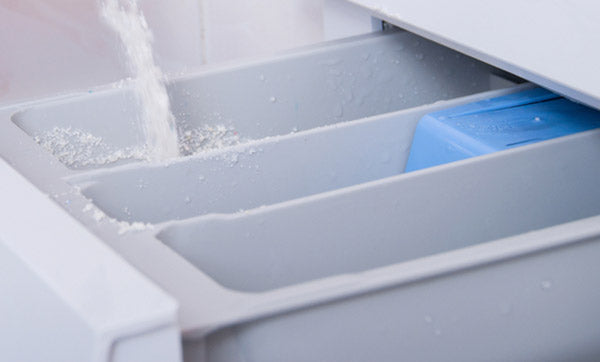
Got hard water? Try dissolving your laundry powder before you wash
What do Adelaide and parts of Brisbane have in common? They've been identified as the most populated parts of Australia with hard water - that is, water with more minerals like calcium and magnesium in it.
So what does that have to do with laundry? Well, laundry powders have chemical builders in them to make hard water ‘softer' by lowering the levels of calcium and magnesium in them. That's a good thing because these ions can bind to surfactants in laundry detergent instead of the dirt on laundry, which is what you're trying to remove. Hard water can also react and cause scale in your washing machine if it builds up.
Phosphates are also often added to laundry powder to help counteract hard water, but when you dispose of laundry wastewater it can cause eutrophication, which is where aquatic plants overgrow and damage ecosystems.
To find out if you have had water, check for these signs:
- Fabrics may feel harder than normal
- A ring shaped mark in the bathtub
- White deposits around bathtaps and drains
What to do about hard water:
- Check your laundry powder box to see whether phosphate is one of the ingredients. If it is, try one with sodium carbonate or sodium citrate instead as they're just as effective and don't cause the same problems when the waste water is disposed.
- Keep a container next to the washing machine so you can pre-dissolve your powder
- Use hot water to dissolve the powder because that will be quicker and more effective than using cold water
Read more

There are so many nursery equipment options these days, so it's hard to know what we actually need and what are the ‘nice to haves'. With nearly 30 years' experience in baby care, Dorothy Waide ha...

Estrogen dominance has been explored by many practitioners since the term was coined by John R Lee and Virginia Hopkins in their book What Your Doctor May Not Tell You About Menopause, revised and ...


